On the road, prepare your meal the night before, keep it cold in an insulated bag and eat it parked, during a proper break. What works best: salads, wraps, soup in a flask, rice or quinoa bowls, quiches, fruit and nuts. Here are ten meal ideas, the breaks the law requires by country, vehicle and status, and how to keep your meal cold until lunchtime.
Why should you stop to eat?
- To keep up your energy and focus. Delivering parcels or meals takes physical effort and constant attention. If you skip a meal, you lose energy and focus in the afternoon.
- To last the whole round. Eating at regular times helps you avoid tiredness and hunger at the end of the day.
- To break up the day. A meal break also gives you time to catch your breath between two batches of deliveries.
Which breaks does the law require?
The rules depend on your vehicle, your status and the country you deliver in. The weight shown is the maximum authorised weight, not the empty weight.
| Who | Rule | Source |
|---|---|---|
| Driver of a goods vehicle over 3.5 t (France, Belgium, United Kingdom) | At least 45 minutes after 4.5 hours of driving at the latest, or at least 15 minutes followed by at least 30 minutes | European Commission, UK text |
| Driver of a van over 2.5 t on international transport or cabotage | The same rule, since 1 July 2026 | European Labour Authority, DVSA |
| Driver of a van under 3.5 t in Great Britain | 10 hours of driving a day at most | gov.uk |
| Employee in France | At least 20 consecutive minutes after 6 consecutive hours of work | service-public.fr |
| Worker in Belgium | At least 15 minutes if work exceeds 6 hours, no later than when it reaches 6 hours | FPS Employment |
| Worker in the United Kingdom | 20 uninterrupted minutes when working more than 6 hours a day | gov.uk |
For goods transport, EU Regulation 561/2006 at first covered only vehicles over 3.5 t. Since 1 July 2026, it also covers vans over 2.5 t on international transport or cabotage; a van delivering inside one country, cabotage aside, is not affected. In the UK, the same extension covers some operators carrying goods between the UK and the EU, and vehicles of no more than 3.5 t that operate only within the UK are not affected.
In France, lunchtime between two periods of actual work counts as a break. In Belgium, the law requires those 15 minutes where no collective agreement or royal decree sets another length.
If you are a self-employed courier in a van of 3.5 t or less, in one country, these break rules do not cover your case: they are for employees and heavier vehicles. In Great Britain, the limit of 10 hours of driving a day still applies. Plan your meal break between two destinations on your round, where you can park.
Rules checked in October 2026.
Eat parked, not at the wheel
In the UK, the Highway Code lists eating and drinking among the distractions to avoid when driving, and requires you to keep proper control of your vehicle at all times. In France, the Interior Minister replied in 2011 that eating at the wheel is not an offence in itself: it becomes one when the driver is no longer alert or can no longer carry out every manoeuvre immediately. In Belgium, article 8.3 of the highway code requires drivers to be constantly able to carry out every manoeuvre and to have constant control of their vehicle.
So eat while parked: you keep control of your vehicle, and you set off better rested.
UK and Belgian rules checked in October 2026; the French minister’s reply consulted in the same month.
Here are 10 meal ideas to eat on the road
1. Soups
Soup travels well and, blended, you can drink it without cutlery. Vegetable soup, chicken soup or minestrone: add vermicelli or pieces of chicken breast to make a full meal. A flask keeps it hot until lunchtime; a heated lunch box warms it up while you are parked.
For example: lentil soup, beef broth with vegetables, chicken noodle soup.
2. Sandwiches and open sandwiches
Ham and cheese is always a safe choice, but tuna, chicken or a vegetarian filling let you vary from one day to the next. Add lettuce, tomato or cucumber for a fuller meal.
For example: grilled chicken sandwich, hummus and grilled vegetables on toast, club sandwich with smoked duck breast.
3. Wraps and burritos
You can eat a wrap without making a mess. Fill it with grilled meat, fresh vegetables, rice and cheese.
For example: grilled chicken and avocado wrap, beef and black bean burrito, vegetarian wrap with grilled vegetables.
4. Salads
A well-filled salad keeps you going without weighing you down for the rest of the day. A box with compartments (a bento) keeps the dressing apart until you eat.
For example: chicken Caesar salad, quinoa and grilled vegetable salad, Greek salad.
5. Quiches
Slice a homemade quiche the night before and eat it cold or reheated.
For example: quiche Lorraine, spinach and feta quiche, mushroom and goat’s cheese quiche.
6. Rice or quinoa bowls
Prepare a bowl of vegetables, meat or tofu the night before, and make double if you also want to eat it the day after tomorrow.
For example: quinoa bowl with grilled chicken, teriyaki rice bowl with tofu, Greek-style quinoa bowl.
7. Pasta
Cold as a salad or hot with a sauce, pasta suits everyone.
For example: Mediterranean pasta salad, pesto and chicken pasta, pasta caprese (tomato and mozzarella).
8. Fruit and nuts
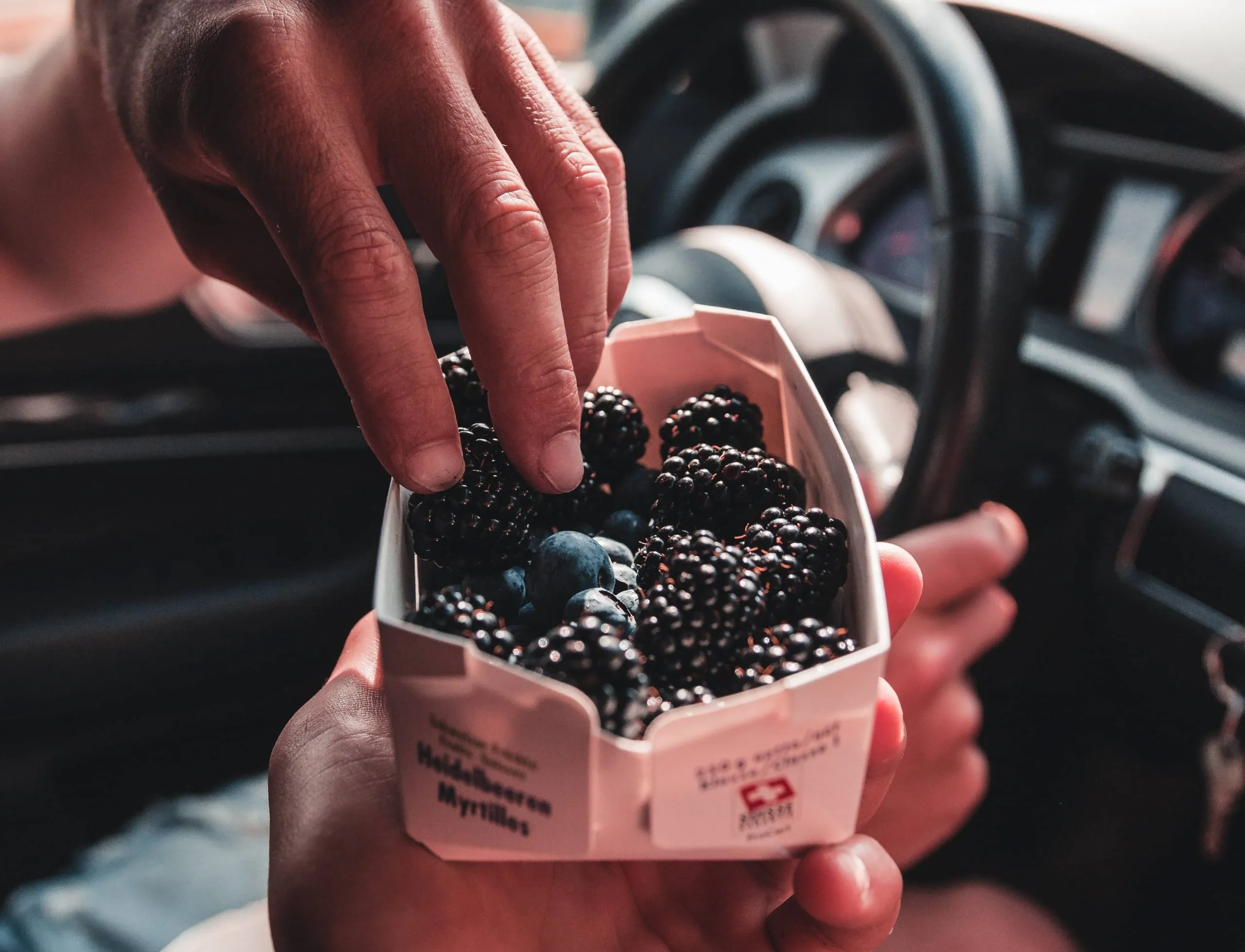
Apples, bananas, oranges or grapes, with a handful of nuts or almonds: the simplest snack between two deliveries.
9. Yoghurts and cereal bars
A plain or fruit yoghurt and a wholegrain cereal bar with dried fruit: enough to last until your next meal.
10. Home-cooked dishes
Pasta bake, roast chicken, roasted vegetables, stew or curry: cook your favourite dish the night before and eat it cold, or reheated in a heated lunch box.
Keep your meal cold until you eat it
A cold meal prepared the night before must stay cold until you eat it:
- In the fridge overnight: the Food Standards Agency (FSA) advises setting your fridge between 0°C and 5°C. The French Ministry of Agriculture advises checking with a thermometer that the coldest part is between 0°C and 4°C.
- Until lunchtime: the Belgian food safety agency, AFSCA, writes that sandwiches and salads with ham, tuna, prawns or raw vegetables are preferably kept in the fridge, at 4°C at most, until lunchtime.
- In the vehicle: for a lunch box with no fridge, AFSCA mentions an insulated bag with ice packs, or fillings less sensitive to heat, such as hard-boiled egg, dry-cured ham, hard cheese, jam or honey. UK government guidance for food businesses gives a useful benchmark: chilled food stays out of the fridge for up to 4 hours, then you throw it away.
- Leftovers of a hot dish: the French Ministry of Agriculture advises not leaving them to cool for more than 2 hours at room temperature, keeping them in the fridge and eating them within 48 hours. The FSA advises reheating them only once, until steaming hot throughout.
Advice checked in October 2026.
Kit yourself out to eat on the road
- An insulated bag and ice packs, from a simple lunch bag to a backpack, depending on how many meals you need that day.
- Airtight containers in glass or BPA-free plastic, with compartments to keep the parts of the meal apart.
- A flask for water or soup.
- An electric cool box plugged into the vehicle’s cigarette lighter, if you want to keep several meals cold.
Prepare your meals the night before: you save time in the morning, and you no longer depend on what you can find on your round.
Find delivery work with Shippr
Are you a self-employed courier looking for work? Shippr gives deliveries and rounds to 1,000 partner couriers in Belgium, France and the United Kingdom. Sign up as a partner courier: once your profile is validated, you can access the delivery work available in the Shippr app.